Immune T cells sense tissue stiffness, McGill study finds
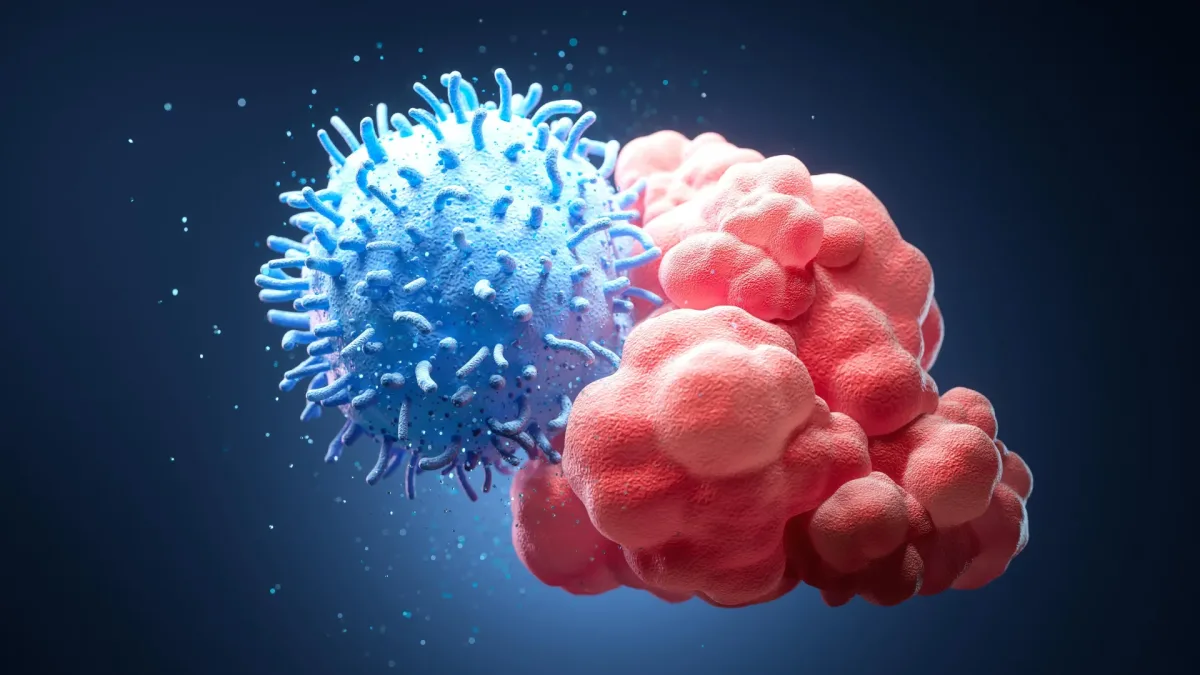
Scientists at McGill University have found that immune cells can detect how stiff their surrounding tissues are, a discovery that could change how the body’s lasting protection against infections is understood. The findings were published in Nature Immunology.
Tissue-resident memory T cells are specialized immune cells that remain in the body’s tissues after an infection and respond quickly if the same threat returns. Researchers had long believed these cells were guided mainly by chemical signals. The new study challenges that assumption, finding that T cells can detect the stiffness of surrounding tissue and use that physical information to influence whether they become long-lasting memory cells. The results suggest that adjusting to stronger mechanical forces within tissues may be important for these protective cells to survive over time.
“This is an exciting fundamental finding that challenges the way we think about immune cells,” said lead author Judith Mandl, a professor in McGill’s Department of Physiology. “It suggests T cells can ‘feel’ their surroundings and adapt to them, making the physical environment an active force in shaping their behavior.”
The research brought together scientists from McGill’s Department of Physiology, the Alan Edwards Centre for Research on Pain, the Department of Bioengineering and the McGill University Health Centre, along with collaborating institutions in the Netherlands and the United States.
Possible impact on cancer and immune treatments
Understanding how T cells respond to physical conditions could eventually open new possibilities for treating diseases in which the immune system mistakenly targets healthy tissue, including autoimmune disorders, allergies and complications involving transplant rejection. The discovery could also matter for cancer research, particularly efforts to improve treatments that use the immune system to fight tumors.
“Tumors are often dense and physically difficult for immune cells to penetrate. Understanding how T cells adapt to these environments could help researchers design cancer immunotherapies that are better able to reach and attack tumors,” Mandl said.
How the experiments were run
To test whether physical surroundings influence T cell behavior, the researchers studied immune cells collected from humans and mice. They placed the cells in specially designed collagen gels that mimicked tissues of different stiffness. As the gels became stiffer, T cells were increasingly likely to acquire characteristics associated with tissue-resident memory cells, which help provide long-term immune protection. The results indicate that the physical properties of surrounding tissues can help shape how immune cells develop.
The researchers now hope to identify the specific molecular sensor that lets T cells detect their physical environment. Working out how this sensor converts mechanical forces into changes in cell behavior could help explain how the immune system establishes lasting protection.
The study received funding from the Human Frontier Science Program, the Canadian Institutes of Health Research, the Canadian Foundation for Innovation, the Natural Sciences and Engineering Research Council of Canada and the U.S. National Institutes of Health.