Three meteor showers and a supermoon: what to watch in November
November 2026 brings three meteor showers, a close pairing of Mars and Jupiter, a Voyager 1 milestone and the start of a run of supermoons, according to NASA’s skywatching guidance.
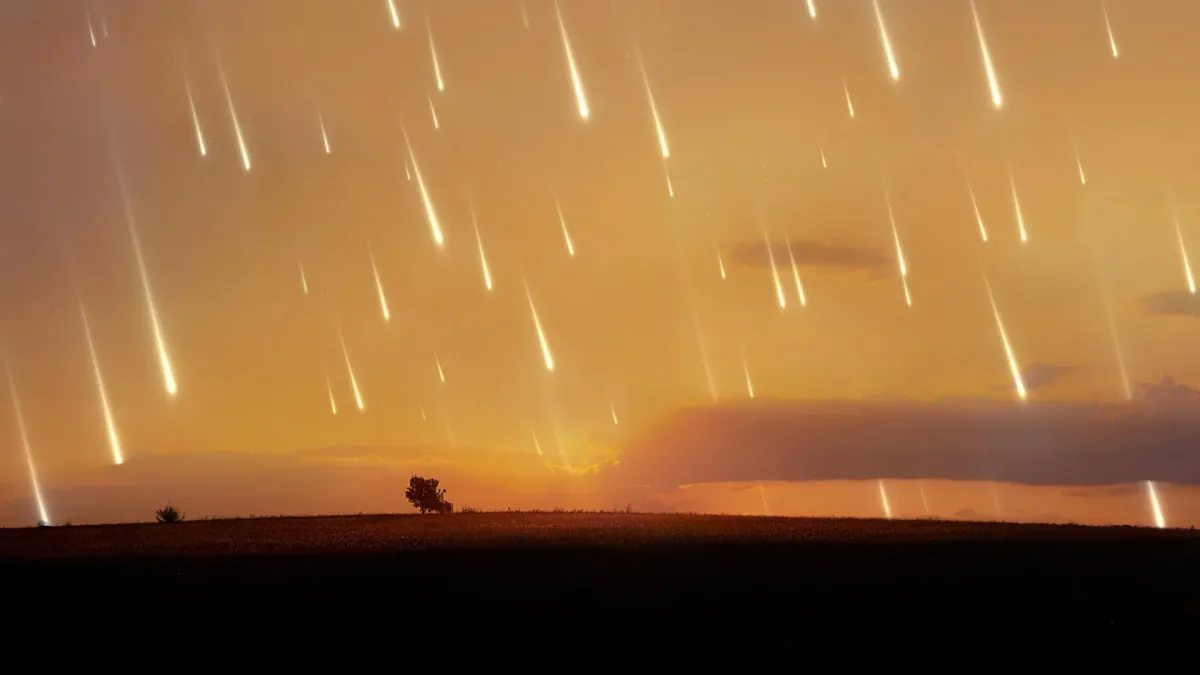
Around November 5 the Southern Taurid meteor shower reaches its peak, with the possibility of exceptionally bright fireballs. The Northern Taurids peak around November 12, producing approximately five meteors per hour under ideal viewing conditions. Both showers take their names from the constellation Taurus, where their meteors appear to originate. Neither is especially prolific, but the Taurids are known for occasionally producing fireballs.
On November 15 and 16, Mars and Jupiter appear just 1.2 degrees apart in the southeastern sky before sunrise — slightly more than the apparent width of two full Moons placed next to each other. Jupiter will be the brighter of the two; Mars will stand out with its reddish appearance. No telescope or binoculars are needed.
On November 17, NASA marks Voyager 1 reaching a distance of one light-day from Earth, the first human-made object to travel that far. Because radio signals move at the speed of light, a message from Earth will take an entire day to reach the spacecraft, and a reply another 24 hours — roughly 48 hours for a round trip. NASA is marking the milestone with its Shine Bright for Voyager’s Light-Day activation.
The Leonid meteor shower offers its best viewing on November 17 and 18 before dawn, after the Moon sets, with potentially 15 meteors per hour under ideal conditions.
On November 24 a full supermoon rises in the evening sky, beginning a sequence of three consecutive supermoons, with another in December and a third in January. A supermoon occurs when a full Moon coincides with a point when the Moon is relatively close to Earth in its orbit; it can appear somewhat larger and brighter than an average full Moon, though the difference is often subtle. NASA recommends looking toward the eastern horizon around sunset, when the Moon may seem unusually large near the horizon — an effect called the Moon illusion, which can occur during any full Moon.
For the best chance of spotting meteors, NASA advises traveling away from bright city lights, allowing about 30 minutes for your eyes to adjust to the darkness, and watching a broad section of the sky rather than one small area.