The hands behind Sydney Sweeney’s jeans: ‘We are helpless’
A garment worker in a Karachi slum watched Sydney Sweeney zip up her jeans in an American Eagle Outfitters advertisement on a smartphone. She recognized the denim, not the actress. The woman, a single mother, has worked on American Eagle production lines and seen those styles and similar models. “I know how all of them are made, because I have worked on them,” she says.
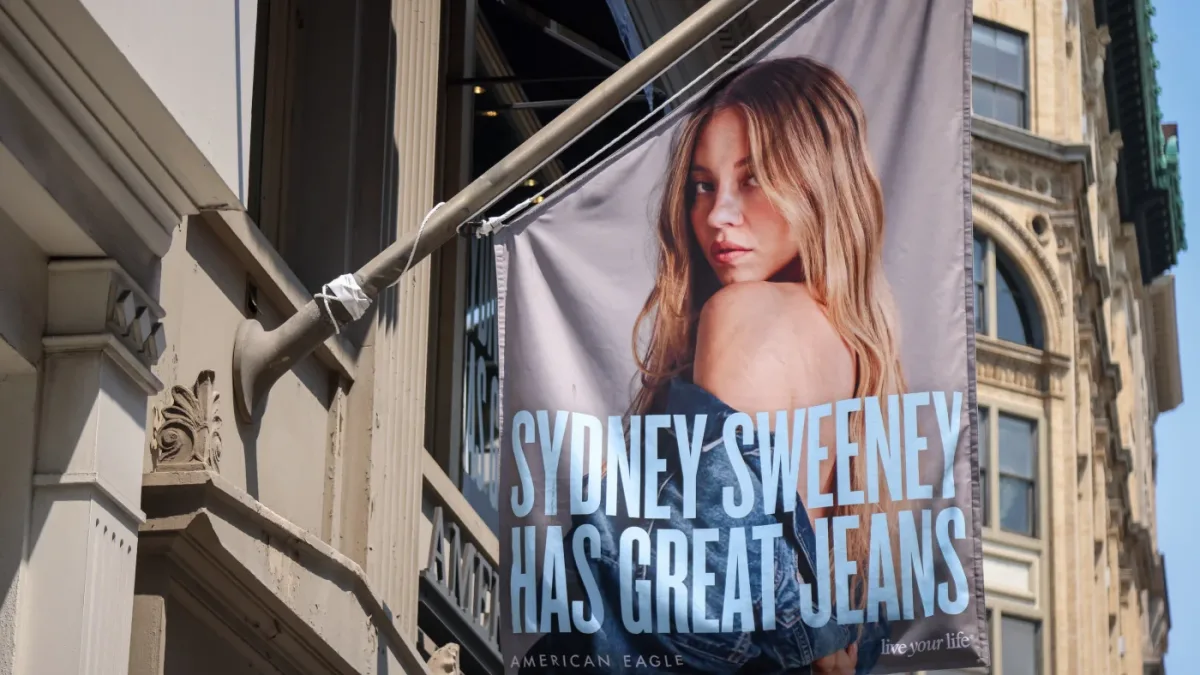
When the ad landed in July last year with the tagline “Sydney Sweeney has great jeans,” it triggered debate over whether it was a winking reference to eugenics because of Sweeney’s appearance. Following the controversy, American Eagle said in a September 2025 statement that “‘Sydney Sweeney Has Great Jeans’ is and always was about the jeans.” Sweeney did not respond to NPR’s request for comment. NPR reports that missing from that debate was any significant reflection on who actually made the jeans — the workers.
Most garment factories operate out of Asia, so most Americans will never meet the workers making their clothes or see the conditions they’re made under.
Workers like S.
The single mother asks to be called S., the initial of her first name, because she fears her bosses will fire her if she’s identified. “If you raise your voice, they’ll push you out,” she says. “We are helpless.”
S. works at a factory run by a company called Artistic Garment Industries, where she says she’s paid about $144 a month, a sum that supports her son and her mother. She says the factory is “oppressively hot.” It was 106 F outside when NPR met her, and she says the factory inside is even hotter. She says it’s hard to leave her workstation to drink water because she has to meet her production targets. She says she has to check the quality of 1,000 to 1,600 pieces of clothing a day — and she’s fainted three times this year. “I feel faint, and I can barely stand. I have no energy in my hands and feet,” S. says. “They don’t even let us sit down.” But S. says she has no other options.
Artistic Garment Industries confirmed it makes clothes for American Eagle but tells NPR that it does not push out workers who complain about their working conditions. The company says it has a robust complaints system that workers can use and says it frequently checks on temperatures inside different parts of its factories. In response to questions NPR sent to American Eagle, the company says it’s “committed to working directly with our suppliers to protect the health, safety, and rights of workers. We take the concerns raised by workers — and those whom NPR interviewed — very seriously.”
S. is one of around 20 workers NPR interviewed over the spring and summer in Bangladesh and Pakistan, two of the world’s biggest garment production hubs outside of China. Those men and women worked in five different factories. All asked NPR not to use their full names and to use only the initial of their first name, worried they’d lose their jobs or be blacklisted from future jobs if identified.
Inside the world of fast fashion
Although the reporting focused on the American Eagle jeans worn by Sweeney for the 2025 campaign, it led to a bigger issue: how fast fashion is made, because garment factories make clothes for multiple brands at once. Workers told NPR they made clothes for Levi’s, Massimo Dutti, The Gap, H&M and American Eagle. They said it’s common knowledge at the factories which brands they are making clothes for, in part because some workers are stitching on the labels.
The garment workers NPR spoke to offered strikingly similar accounts, and they echoed worker testimonies in multiple reports by labor and climate rights groups. The workers said they’re paid low wages, even as they’re expected to reach what they say are unreasonably high production targets, often laboring in sweltering factories. These are targets like stitching 200 sleeves an hour or checking the quality of a thousand pieces of clothing a day. The workers NPR interviewed say they are unable to hydrate or cool down properly, even as extreme heat caused by climate change makes their workplaces and homes even hotter.
It can be four to six degrees hotter inside a factory, says Jason Judd, executive director of the Global Labor Institute at Cornell University, which researched heat inside garment factories and worker homes. “You’ve got all those bodies, all that material, all that machinery putting off heat. You’ve got ventilation problems.”
“We’re starting to see fainting, heat illness, exacerbation of chronic disease, even death,” says Cara Schulte, a researcher at Climate Rights International. She authored two reports on the impacts of heat on garment workers. Schulte says workers are put under that extreme pressure to reach production targets. A major reason, she says, is that brands demand their suppliers make enormous volumes of clothes on tight deadlines and on thin profit margins. She says garment workers are vulnerable to the heat because they’re clustered in countries like Bangladesh and Pakistan. She cites U.N. publications stating that those factories are “in areas that are warming faster than the global average, that are [already] incredibly hot and humid.”
H&M, one of the brands that workers identified making, said it “put great effort” in ensuring fair payment to its suppliers and that labor costs are “excluded from the price negotiations of our product orders” to ensure that worker wages were not driven down.
Citing her own research, Schulte of Climate Rights International says garment workers are compelled to risk their health to survive. It’s not a choice, she says. “Workers are not choosing to take these risks,” she says. “They’re being forced into them by poverty.”
One worker’s survival strategy
Like a woman who asks NPR to call her R. When they met in February in the Bangladesh capital, Dhaka, R. said she was working six days a week, at least 12 hours a day, for $140 a month at a garment factory run by a company called MBM, which makes denim clothes, including for Levi’s. Her job is to stitch 150 pieces of fabric per hour, which are assembled into jeans.