Army pauses blast of 68 lead azide barrels after court order
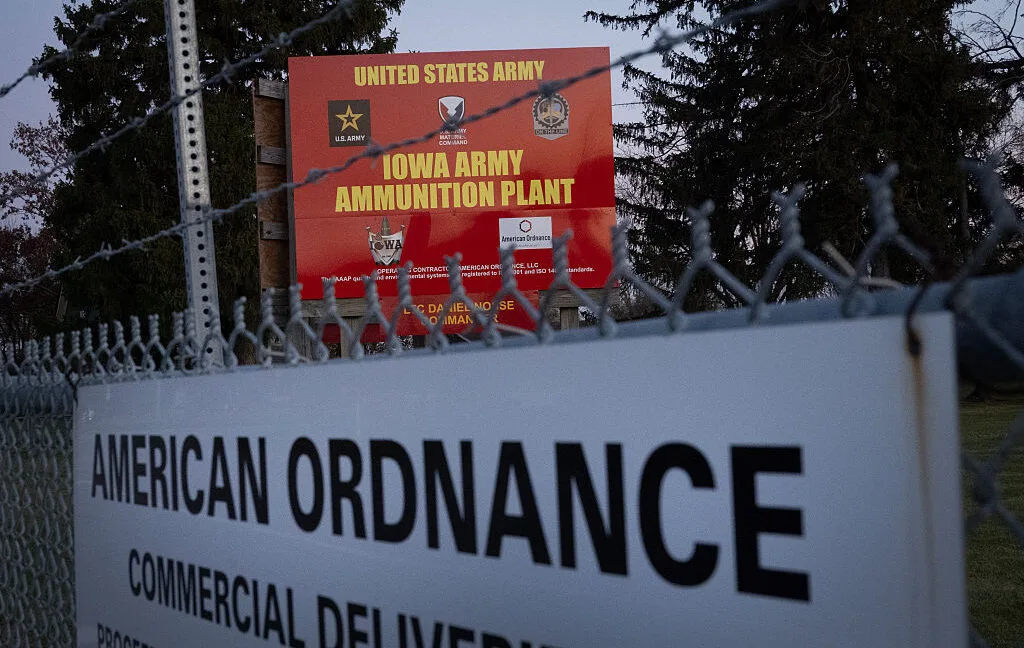
The US Army said Thursday it would delay a plan to blow up 68 deteriorating barrels of lead azide, a compound that would send toxic gas and lead into the air. Later Thursday, a federal appeals court halted the plan with an emergency order.
According to modeling the Army released earlier this week, the plume, which contains neurotoxic lead, could drift 100 miles north of the Army installation in Middletown, Iowa, where the barrels are stored. The Army had planned two controlled detonations, set off simultaneously around noon Friday, to destroy the barrels where they lie, inside earth-covered concrete containment structures known as earth-covered magazines, or ECMs.
Before the court stay, the Army had moved the blast to November 23 to give it more time to communicate with Iowans, who reported they had not known about the detonations until earlier this week.
“Public communication is essential to public trust,” Acting Secretary of the Army Adam Telle said in a social media post at 7:31 pm ET Thursday. “Therefore, the Army will continue to actively engage with state and local officials throughout the region to distribute accurate, up-to-date information.”
Telle said the Army could not put off the detonation past Monday because of how far the compound had deteriorated. It is extremely explosive and sensitive. “This will delay the detonation until the latest possible moment prior to a forecasted temperature drop, which would risk further destabilization of the material.”
Lead azide is used in munitions detonators and is stockpiled by the US military. In March, the Army found that the stockpile at the Iowa Army Ammunition Plant (IAAAP) had deteriorated. The lead azide in the 68 barrels, reported to total around 9,700 pounds (4.4 tons), is suspended in a water and ethanol mixture inside the ECMs but has degraded and crystallized over time.
The Army said temperature swings can dissolve lead azide into the water and alcohol solution and let it recrystallize into needles or platelets. In crystallized form, lead azide becomes extremely sensitive to physical shock, friction or heat. The Army called the current state a “catastrophically hazardous condition.”