Data centers are “fundamentally unsustainable,” author says
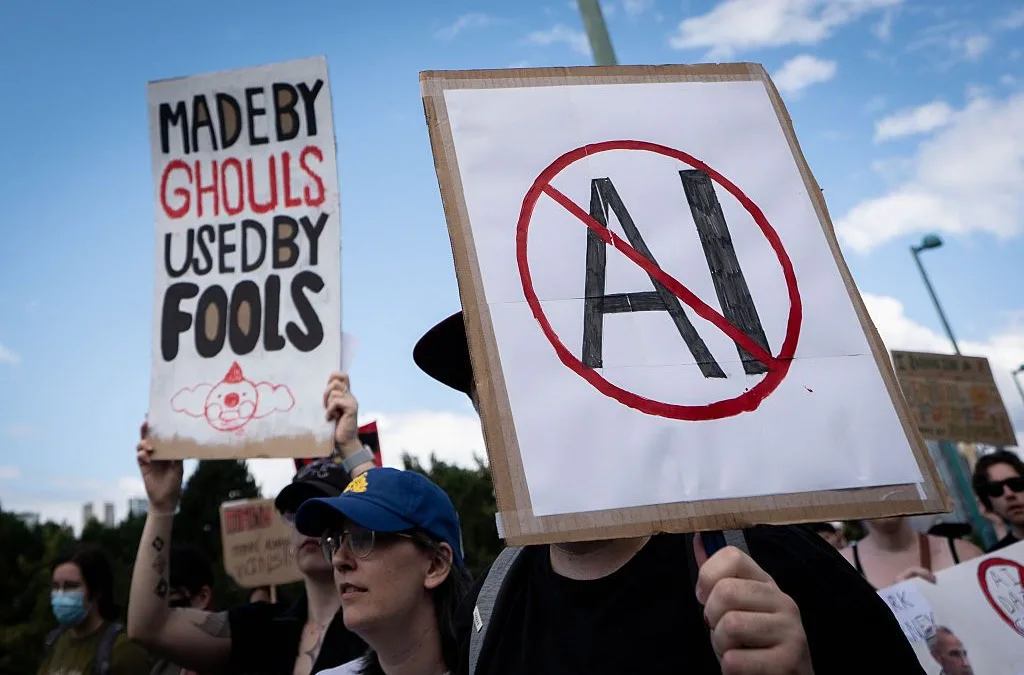
Journalist Paris Marx investigates the impact of data centers and generative AI in his new book “Hyperscale,” taking readers inside the facilities themselves and tracing how decades-old computing infrastructure recently became a political landmine. The book is well-timed, to put it mildly: data center backlash seems to have been one of the motivators for the massive blue wave in the recent midterm elections, and those debates are likely to continue as Democrats wield more governmental power.
In an interview with TechCrunch, Marx described the data center buildout as “fundamentally unsustainable” and “completely out of line with a livable planet,” while also arguing that these facilities make for an obvious target amidst broader anger at the tech industry. After all, if a data center is being built in your community, “it’s very physical, it’s very material.”
“It doesn’t matter what side of the political spectrum that you’re on,” Marx said. “You are going to feel the effects of that in your quality of life, in your power bill, potentially in your access to water, potentially in what you hear around your community, if these air conditioning units on the roofs of data centers are making a lot of noise.”
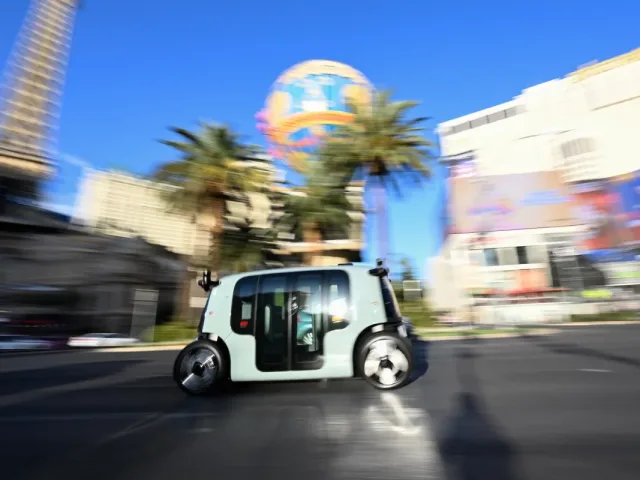
He also suggested that data center opposition is only the most visible piece of a wider movement targeting “the physical manifestations of the tech industry, […] whether it’s the opposition to Flock cameras rolling out across the United States, or the smart glasses that Meta is trying to put on people’s faces, or even the self-driving cars that Waymo is rolling out.”
In the conversation, which was edited for length and clarity, Marx discussed data centers’ environmental impact, how tech companies are responding to community resistance, and what it’s actually like inside a data center.
Getting inside a hyperscale data center
Getting inside a hyperscale data center was not the easiest task in the world, Marx said. Researchers who had studied data centers for years longer than he had told him that before the generative AI moment, and before all the attention recently put on data centers, it was quite a bit easier to do so. He sent emails to a number of companies asking if he could get inside, often got no response, and other times got a no. After visiting the outsides of some data centers in places like northern Virginia and Ireland, he went down to New Zealand to go inside one.
The thing that struck him most was the level of security. You would expect such infrastructure to be heavily securitized, because the data inside needs to be kept safe, with big fences and security cameras around the facilities. But to go inside, he had to send his passport in advance, and it was checked when he arrived. As he went through the data center, every single door was locked unless you had a key card to unlock it.
Inside the server room itself, where the hardware is stored in tall racks that look like cabinets, you might imagine a sinister location with eerie lighting. In truth, Marx said, it’s just quite utilitarian: a warm room with air conditioning blasting into the servers from nearby vents. It was also really loud, because of all the fans running from all the servers, and really kind of piercing. To be in there for a while, you’d probably want earplugs.
Why data centers sustain a whole book
Before reading the book, the interviewer thought of data centers as important but a little bit boring. Marx said he felt the same: he was aware they were out there but had not been paying particularly close attention. A number of stories tipped him off that there might be more worth looking into.
The first was hearing about the water pressures created by data centers in Chile around the capital of Santiago, where companies like Google and Microsoft were building facilities and communities were concerned about their access to water and started organizing around that.
Then there was how much electricity data centers were consuming in Ireland, to the point that they now consume more than 20% of the country’s electricity, pushing up power prices and putting pressure on the grid, such that the grid operator put a moratorium in place for grid connections for data centers around the Dublin area back in 2022. That was even before the generative AI moment that caused a surge in data center construction.
The other was in The Dalles, Oregon, where Google had built its first company-owned data centers about 20 years back. Its water deal was coming up for renewal, and it wanted to build more data centers there, so it needed more water. When residents started asking how much water Google was actually using, a journalist at The Oregonian went to the city and essentially asked, “Hey, how much water is Google using? Our readers would like to know this,” Marx said, and was hit with a lawsuit instead of being given that information, because Google did not want it to be public. When it did come out about a year later, Google revealed that it was using 29% of the city’s water, which seemed quite significant.
That was around when ChatGPT was being released and generative AI was starting to take off. It felt like there were pockets of places where a lot of data centers had already been constructed, where they were putting pressures on the communities that were causing people to respond, and it felt like that was going to start coming to a lot more communities. It was a good time to dig in and pay attention.
Marx said the book does not just address data centers’ environmental impact; they are his way in to talk about this broader tech moment. Particularly the hyperscale data centers represent to him how these tech companies are doing business now.