Meta AI chief says “superintelligence is arriving” after Claude proof claim
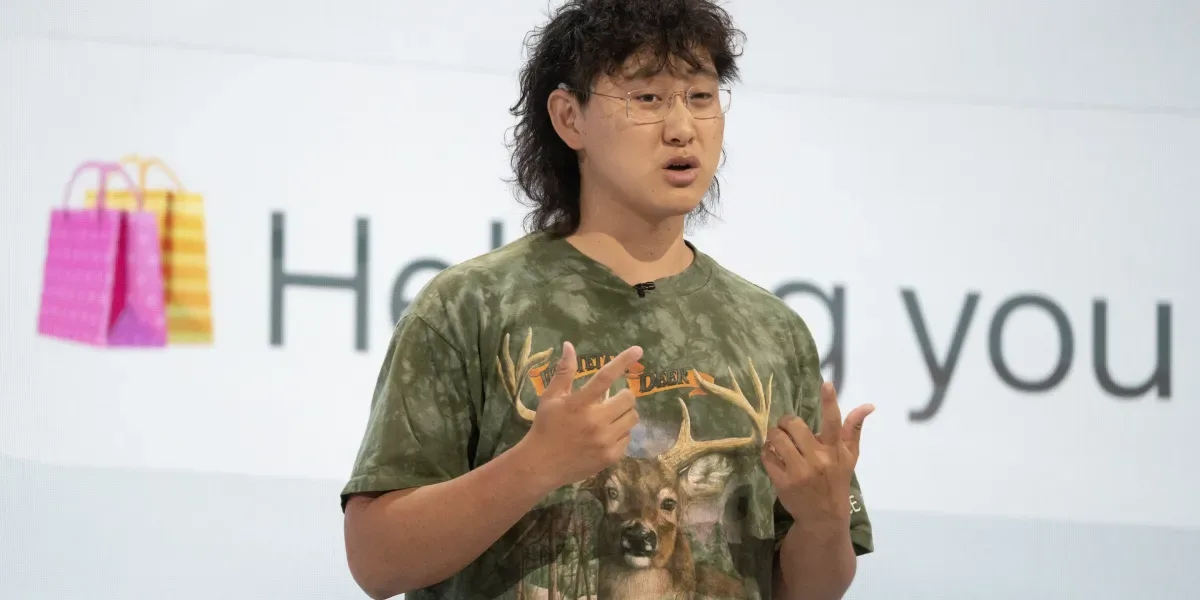
Alexandr Wang, Meta’s chief AI officer and head of its Superintelligence Labs, posted on X on Sunday that “superintelligence is arriving.” He wrote that “the models are clearly going to be intelligent enough to automate all of AI research,” and that “it is hard to imagine a world where humanity can maintain control over fully unconstrained recursive self-improvement.” He said the remaining obstacles are “no longer intelligence; they are domain-specific know-how, plumbing, and experimentation.”
“How humanity acts over the next year will have great consequence on what future world we live in,” Wang wrote.
Wang was posting about a claim by Levent Alpöge, a mathematician on Anthropic’s technical staff, of a proof of the Riemann hypothesis made with Anthropic’s Claude. The 167-year-old problem about the distribution of prime numbers is one of the Clay Mathematics Institute’s $1 million Millennium Prize problems. “It is hard to overstate the magnitude of discovery that we have just witnessed,” Wang wrote, describing it as completed “with the help of an alien mind that we don’t understand.” He added that building an atomic bomb is “a homework problem compared to the Riemann hypothesis.”
Wang’s warning came as Meta expects to devote $135 billion to $145 billion to capital expenditures this year, driven largely by AI infrastructure costs.
Reaction crosses political lines
The Next Web counted more than 8 million views in the post’s first half day, and the reaction crossed the usual political lines. Jon Favreau, President Obama’s former director of speechwriting, called it “f—ing madness” and said the people Americans elected should be doing everything they can to stop the frontier labs “from handing over control of humanity to superintelligent machines.” From the right, Megyn Kelly posted: “This is the head of Meta’s superintelligence lab. We’ve had similar warnings from Anthropic, the former head of alignment at OpenAI, not to mention Elon himself at X. How many more do we need until we garner the all-hands-on-deck reaction this deserves?”
Wang argued against fatalism. He wrote that he noticed “a particular form of lazy thinking within the AI industry”: the view that “ASI is inevitable and the only problem to solve is how to do it safely.” He added, “We should not be okay with a ‘handover’ of society to AI.” After the backlash, he wrote, “What I am saying is, this path is not inevitable,” and “leaders and leadership matter more than ever.” He pointed to Meta’s decision to delay the launch of its Muse model for months and to Zuckerberg’s call for most computing power to go toward serving customers rather than toward AI that improves itself.
Zuckerberg made Wang the center of Meta’s AI push in June 2025, when Meta invested $14.3 billion in Wang’s former company, Scale AI, for a 49% stake. In January, Zuckerberg told investors that “this is going to be a big year for delivering personal superintelligence.” Meta has raised the bottom of its 2026 spending guidance at every quarterly report since, from $115 billion in January to $135 billion in October.
As for the Riemann hypothesis, Anthropic’s Alpöge has said he plans to explain the AI-generated proof in talks and a written account. Until mathematicians read it, the Clay Institute’s $1 million stays unclaimed.