Democratic hopefuls weigh when to launch 2028 campaigns
Democratic White House hopefuls are turning to one of their first big decisions for 2028: exactly when to enter the race, NBC News reports. Jump in early and face the national spotlight and the risk of burning through cash too soon. Wait too long and risk getting left behind in what is expected to be a crowded field.
NBC News spoke with advisers to potential candidates, donors and outside strategists about the considerations that go into the timing of an official announcement.
A mad rush in two phases
Several strategists said to expect two main phases of rollouts, with the potential of it starting even before the end of the year. The first is in January, after the new party superstars in Congress settle in. The second is in February and March, with the bulk of the field likely to be in place by March 31, just as the first quarter of fundraising ends.
“The minute you jump in, you need to start paying people, raising money, all of those things,” a senior Democratic strategist who worked on a presidential campaign in 2020 said. “But time is also your friend in a crowded field. … You need to distinguish yourself.”
Governing
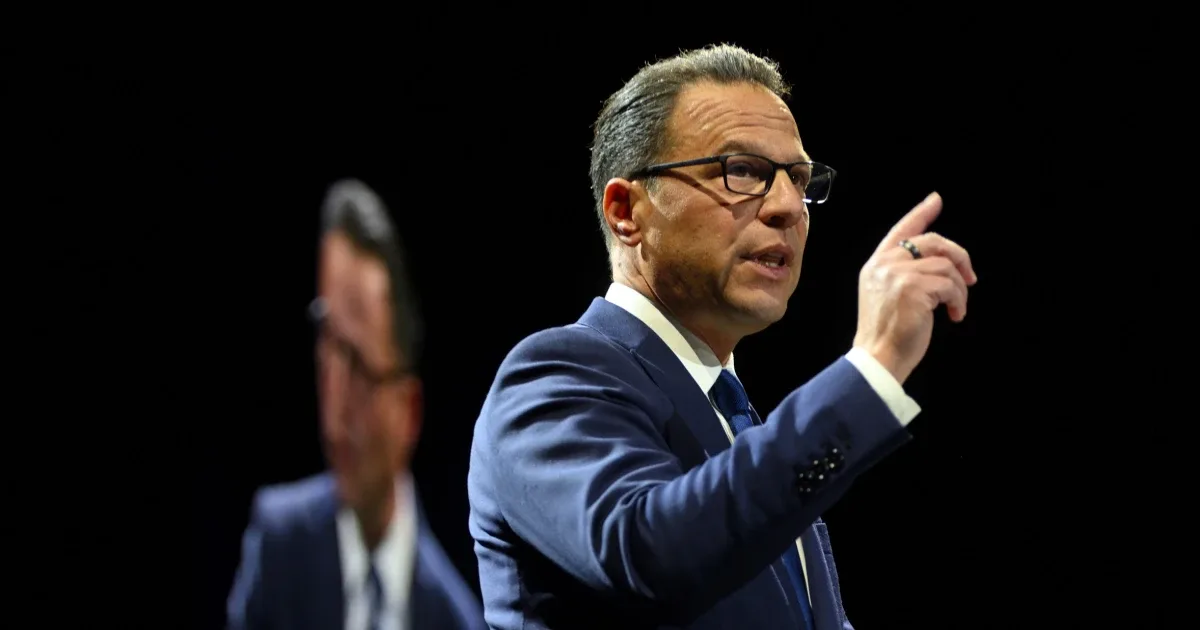
Voters just re-elected Govs. Josh Shapiro in Pennsylvania, JB Pritzker in Illinois and Gov. Wes Moore in Maryland to four-year terms. It’s unlikely they’d announce before their own January swearing-in ceremonies. They might even have to clear legislative sessions and state of the state addresses from their plates first.
Money
Locking down donors is vital to demonstrate fundraising strength early. Kentucky Gov. Andy Beshear is asking his donors to convene in December before any decision happens. Some potential contenders, like Arizona Sen. Mark Kelly, are already sitting on a pile of cash. And while Pritzker, a notorious self-financier, is expected to fundraise for the first time, the billionaire can reliably lean on personal wealth.
Staffing up
Some nascent campaigns have already locked down their hired guns, but with so many Democrats competing for talent, there are some potential contenders still wrangling over some important hires.
“There are a lot of factors,” said a person working with a potential 2028 candidate. “It’s a conversation I know everybody is having.”
Book releases
Former Transportation Secretary Pete Buttigieg is due out with a book in January. Moore has a scheduled March release for his book. Conventional wisdom, though it isn’t always accurate, is that candidates will seek to tap into momentum from the publishing tours to then shift into campaign mode.
The X factors
What Rep. Alexandria Ocasio-Cortez, D-N.Y., and former Vice President Kamala Harris decide to do looms particularly large over the rest of the field. Someone like Rep. Ro Khanna may want to jump in sooner rather than later to get a leg up in the progressive lane over AOC.
For his part, California Gov. Gavin Newsom has said he would not run for president if Harris does, though not everyone is buying that.
“When he said it, it was total bull—-,” said billionaire Democratic donor John Morgan. “Put this down for my prediction: Even if she runs, he’s running.”
DSCC chair says 60 Senate seats ‘definitely possible’
Sen. Kirsten Gillibrand, D-N.Y., is seeking another two-year term as chair of the Democratic Senatorial Campaign Committee after her party flipped nine seats on its way to securing a 56-seat majority.
In an interview with NBC News, Gillibrand said she’s bullish that Democrats can expand the map again in 2028, calling it “definitely possible” to capture 60 seats and win a very rare, filibuster-proof majority.
“It’s on the table. There’s some easy targets that I’m very excited about — obviously, Wisconsin and North Carolina,” Gillibrand said. “But I would also suggest any state that was in play last cycle is in play this cycle. Waves tend to be two cycles long, and this is a very large blue tsunami.”
If Democrats hold all their seats in 2028, their best pickup opportunities are seats in the highly competitive states of Wisconsin, held by Sen. Ron Johnson, and North Carolina, held by Sen. Ted Budd. From there the hill gets steeper, requiring victories in redder states.
“I think we can put a lot of these states that we put in play last time that are exciting states like Kansas and South Carolina and Iowa,” all of which Democrats won in November, Gillibrand said. “There’s no reason why we can’t find extraordinary candidates, again, who have the right message to fight for their states to run in these very red and purple places.”