White House Scrambles to Assign Blame Over Iowa Lead Azide Blast
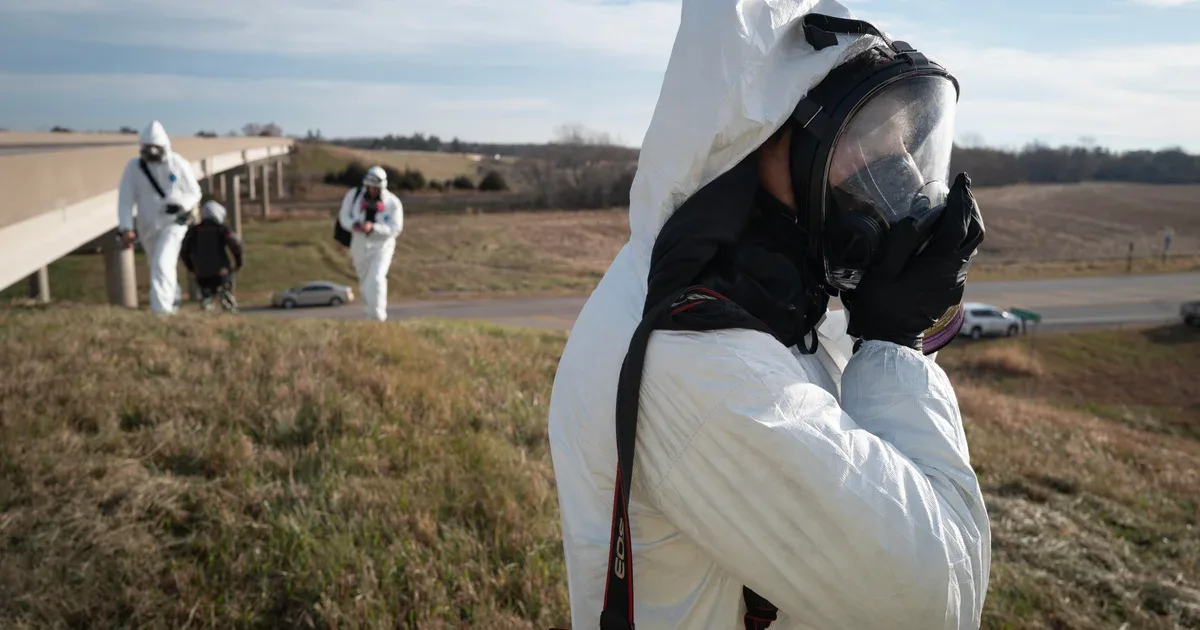
The White House was caught off guard by the lead azide crisis at an Army munitions plant in Middletown, Iowa, and is now searching internally for who failed to flag the risk to senior officials, CBS News reported, citing sources familiar with the matter. The controlled detonation of about five tons of degraded lead azide went ahead Wednesday, and President Trump publicly praised it as having “exceeded expectations.”
But the glowing post-blast messaging sits awkwardly beside CBS’s account of the days before it. According to several U.S. officials granted anonymity to discuss a controversial topic, the Army had known since spring that the lead azide posed a threat to the public and the environment, and then-Army Secretary Dan Driscoll did not raise it with Defense Secretary Pete Hegseth or other senior administration officials. Acting Army Secretary Adam Telle learned of the stored chemicals and the risks in September and likewise did not brief superiors, those officials told CBS.
The reporting is not uniform on how far up the chain notification travelled. A separate source familiar with discussions around the ammunition told CBS that the Army notified Hegseth’s office early on; other officials said the notification never reached Hegseth directly. Two sources said the process of coordinating the response was triggered before Driscoll left the administration — he resigned in September amid tensions with Hegseth. Those details matter because they describe a breakdown at different rungs of the same ladder.
CBS also reported that there have been discussions about quietly moving Telle out of the acting role in coming weeks. That is attributed to several sources and framed as internal discussion, not a decision.
What the White House is reacting to
The political pressure is visible in the sequence CBS describes. The situation rapidly became a national news story, with Iowa residents complaining they had not received sufficient notice about potential dangers. Administration officials have expressed frustration in internal conversations that they had to scramble to deal with the crisis, and CBS reports that leaders at the most senior levels were taken by surprise.
Trump’s Truth Social post — “Great job by the Army, and others, in Iowa!!! President DJT” — came about five hours after the blast, and CBS notes that the president and other administration officials characterised the detonation as having exceeded expectations, with maximum mitigation efforts successfully achieved.
Why it matters
The gap between the public story and the internal one is the story here. On the record, the operation is a success; in private conversations relayed by CBS, the same operation is a scramble that senior officials did not see coming. The unanswered question the reporting leaves open is procedural rather than technical: whether an Army secretary, an acting secretary, or an office inside the Pentagon failed to escalate — and the accounts CBS gathered do not fully agree on which. That ambiguity is likely to shape any accountability exercise, because blame depends on where the notification chain is said to have broken.