A Defense Pact Meets Its First Real Test in Yemen
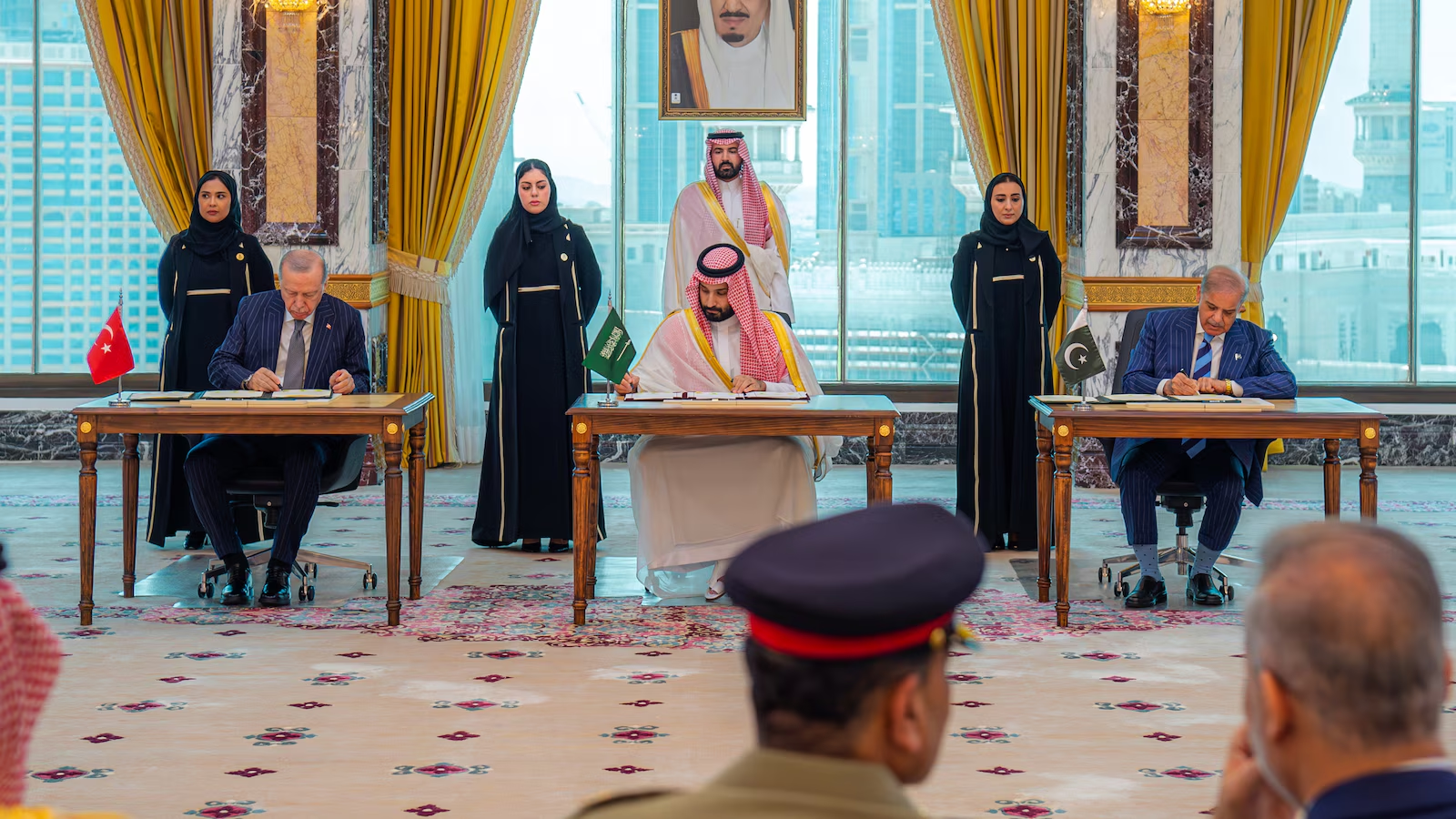
Pakistan is hosting talks Friday with Saudi Arabia and Turkey under a trilateral defense pact that treats an attack on any member as an attack on all three, according to two security officials who spoke to ABC News on condition of anonymity. The meeting comes as the Houthis reported an airstrike in southwestern Yemen killed at least 11 people, including children, and as Turkey finalized its ratification of the agreement.
The two ABC News items together lay out the substance. The officials said the talks in Islamabad would focus on developments in the Middle East, including ongoing attacks on Saudi Arabia by Yemen’s Iran-backed Houthi rebels. Senior diplomats as well as defense and military officials from the three countries are expected to discuss ways to deter threats, expand military cooperation, share intelligence and strengthen defense industry ties, the officials said. Pakistan’s Defense Minister Khawaja Muhammad Asif, Foreign Minister Ishaq Dar and army chief Field Marshal Asim Munir will attend.
Turkey’s ratification is now complete: ABC News reported that President Recep Tayyip Erdogan formally approved the three-nation agreement, according to Turkey’s Official Gazette on Friday. Earlier this month, legislators approved it by 279 votes to 119 in Turkey’s 699-seat parliament, despite objections from opposition parties who argued the agreement could embroil Turkey in regional wars and put Turkish soldiers in harm’s way. Turkish officials have said Ankara is considering sending military assistance to Saudi Arabia but insist the Mecca agreement is defensive and that no Turkish troops would be deployed to fight in Yemen or to attack the Houthis.
Pakistan has said the agreement is purely defensive in nature and is not against anyone, including Iran, and that the trilateral alliance reflects a shared desire to strengthen strategic security cooperation. Asif has said Pakistan will use “whatever means are available” to defend Saudi Arabia against attacks from the Houthis. The ABC News report also noted that Pakistan is still making efforts with help from countries in the Middle East, including Qatar, to urge the United [the text is truncated at that point].
The strike and the disputed account
On the Yemen side, the Houthi-run health ministry said Friday that a strike on a densely populated area in southwestern Yemen killed at least 11 people, including children. Ministry spokesperson Anees al-Asbahi said on X that an airstrike hit a cinema building in Turbah city in Taiz province early Friday morning, killing people including children who sold ice cream in the area and had been living in part of the building. He said the death toll was preliminary as rescuers tried to pull more bodies from under the rubble, and he blamed the strike on Saudi Arabia. The AP could not independently verify his claims, and the Saudi coalition made no public comment about the incident. Footage aired by Houthi-controlled al-Masirah TV showed a destroyed building and people digging through the rubble; the AP could not independently verify that footage either.
The pattern here is a pact built for deterrence being tested by the exact scenario its members describe as defensive. Turkey’s officials insist no troops will fight in Yemen; Pakistan says the alliance is not aimed at anyone, including Iran; yet the meeting’s stated agenda is Houthi attacks on Saudi Arabia, and Pakistan’s defense minister has promised to defend the kingdom by whatever means are available. Those reassurances and that commitment sit awkwardly together.
The verification gap matters too. The only account of the Taiz strike comes from the Houthi-run ministry, which blamed Saudi Arabia, and neither the AP nor the Saudi coalition has confirmed it. What is documented is the diplomatic calendar: delegations arriving in Islamabad, ratification completed in Ankara, and a committee meeting under an agreement that treats an attack on one member as an attack on all three.