BP strikes oil and gas in Brazil’s deepwater Tupinambá block
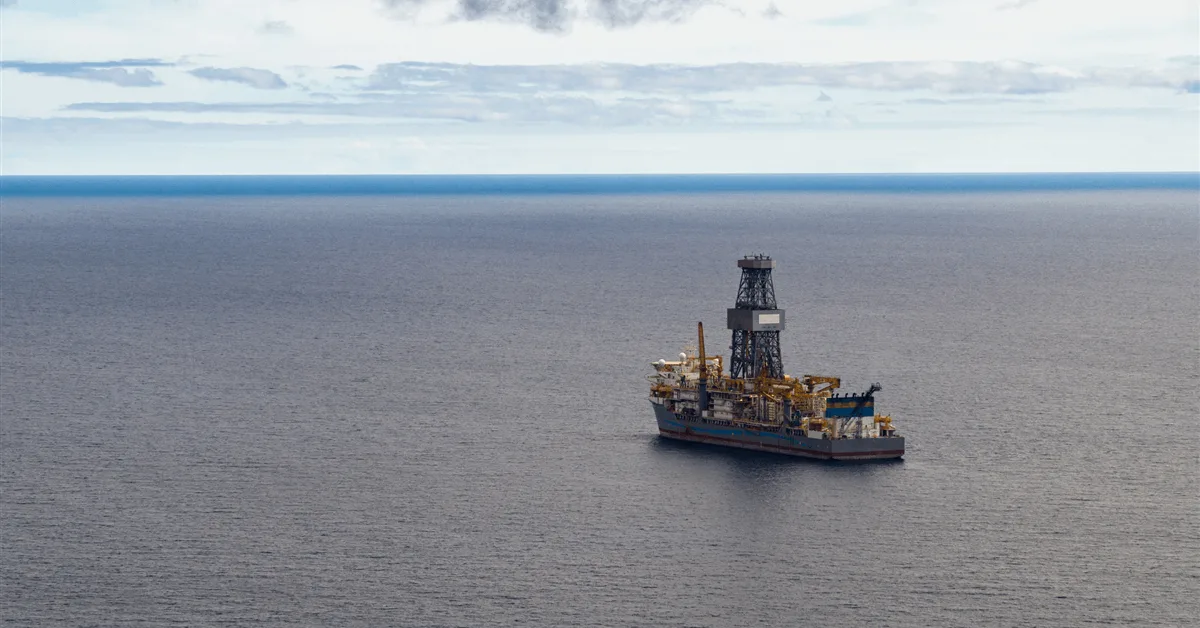
BP PLC has made a new hydrocarbon discovery in the Santos Basin offshore Brazil, in the deepwater Tupinambá block.
“Evaluation of the Tupinambá post-salt section is ongoing, while drilling continues toward the pre-salt section”, BP said in a press release. The company gave no estimate for well 1-BP-14-SPS.
According to BP, the discovery lies 275 kilometers (over 170 miles) off the South American country’s coast, in waters nearly 2,400 meters (nearly 7,700 feet) deep.
Tupinambá is among the assets BP recently agreed to farm out to Shell PLC. Under the agreement, Shell Brasil Petróleo Ltda will buy 50 percent of Tupinambá, and Shell Offshore Inc will acquire 30 percent of the deepwater Paleogene leases on the United States’ side of the Gulf of America.
“The transactions support BP’s disciplined approach to capital allocation in service of becoming a simpler, stronger, more valuable company”, BP said September 2. BP upstream executive vice president Gordon Birrell said, “Brazil and the Gulf of America are important regions for BP, and bringing together two experienced operators can help unlock the potential of both opportunities”.
BP will remain operator in Tupinambá and Conifer, with stakes of 50 percent and 70 percent respectively.
In a separate Brazilian offshore basin, Campos, state-controlled Petróleo Brasileiro SA (Petrobras) earlier this year declared a new hydrocarbon discovery under a license it co-owns with BP. Well 1-BRSA-1404DC-RJS was drilled in Sector SC-AP4 in Campos’ pre-salt layer. The discovery is part of block C-M-477, which Petrobras operates with a 70 percent stake; BP holds 30 percent.
“The hydrocarbon-bearing interval was identified through electric logs, gas shows and fluid sampling”, Petrobras said April 13. “The samples will subsequently be sent for laboratory analysis, which will allow the characterization of the reservoir conditions and the fluids found, enabling the continuation of the evaluation of the area’s potential”.
Announcing the new Santos discovery Thursday, BP said the Transocean Deepwater Mykonos drillship would now move to appraise last year’s discovery in the Bumerangue block, also in the Santos Basin. According to the company, the Bumerangue discovery (well 1-BP-13-SPS) is BP’s biggest fossil fuel discovery in 25 years. BP is the block’s sole owner.
“[I]nitial laboratory and pressure gradient analysis has confirmed the presence of a ~1,000-meter gross hydrocarbon column including a ~100-meter gross oil column and a ~900-meter gross liquids-rich gas-condensate column”, BP said in an update dated October 30, 2025. “Given the presence of liquids across the entire hydrocarbon column, the high-quality rock properties observed and BP’s extensive technology and deepwater developments experience, BP believes that the carbon dioxide in the reservoir can be managed”.
Later, in its annual report for 2025, BP said its initial estimate was eight billion barrels of liquids in place, roughly equally split between oil and condensate.
Also last year, operator Petrobras drilled an appraisal well in Brazil’s Alto de Cabo Frio Central block, where BP owns a 50 percent stake. “The block strategy is under development and will be finalized following completion of post-well analyses, expected by end 2026”, BP said in its annual report.