A U.N. Deal on Killer Robots That Only Agrees to Keep Talking
Diplomats meeting at the United Nations in Geneva agreed to start discussing options to regulate lethal autonomous weapons, often called “killer robots,” after a week of negotiations that ran until the small hours of Saturday morning. The compromise gives countries two years to suggest regulations that could be legally binding but could also be optional — a structure that critics say falls well short of what the moment demands.
NPR, which reported the agreement, described bleary-eyed negotiators insisting the deal was better than nothing and showed the U.N.’s disarmament process could still function. That is the strongest defence available in the text, and it is a procedural one: the machinery moved. On substance, the item is explicit that for many humanitarian organizations and many countries, the deal falls far short of what they had hoped for.
The gap between the ask and the answer
The clearest way to see that gap is to set the outcome against what was requested beforehand. According to NPR, the International Committee of the Red Cross, described as the guardian of the Geneva Conventions, said before negotiations began that it was urgent for legally binding rules to be drafted within a year. That call was backed by the U.N. secretary-general and by Pope Leo. The agreement that emerged offers two years, and binding rules only as one option among others.
The ICRC’s legal adviser, Georgia Hinds, supplied the moral case in terms the negotiators did not adopt: “There is a fundamental ethical concern with having what are essentially these life-and-death decisions determined by programming, determined by an algorithm,” she said. “That’s not something that you can fix with better technology. That is a moral red line that we cannot cross.”
Why the urgency
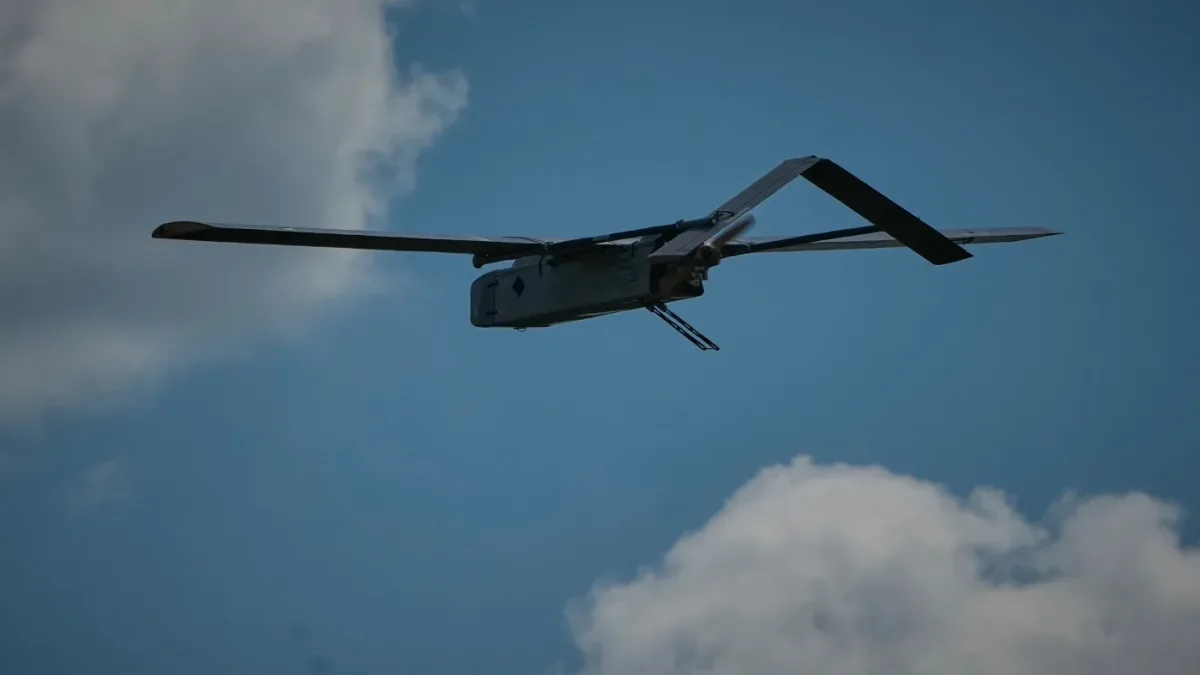
The pressure behind the ICRC’s timeline comes from what is already happening on battlefields. NPR reported that in Ukraine, Sudan and Gaza, civilians are being killed by semi-autonomous drones, and that this year in Sudan, 80% of civilian deaths were caused by drones according to the U.N. Humans remain, albeit very remotely, in control for now. The fear humanitarian organizations voice is that AI-assisted weapons are on the verge of making the decision to kill entirely on their own.
NPR also noted that some of the world’s most powerful countries, among them the U.S., Russia and Israel, had already indicated their positions before talks began — a detail that helps explain why the landing zone was a voluntary-options process rather than a treaty.
What the split actually is
The disagreement here is not between outlets; it is inside the room, and NPR captures both sides without resolving it. One camp measures the deal by whether the disarmament process survives and produces something later. The other measures it by whether an algorithm can be stopped from deciding who lives or dies, and by when. On that measure, a two-year window to propose rules that may be optional does not answer the question the ICRC, the secretary-general and the Pope put on the table.
The pattern this suggests is a familiar one in arms control: the countries furthest ahead in a technology set the pace of its regulation, and the pace chosen is slow. What makes this case distinctive is that the technology in question is not a weapon that kills on impact but one that decides whom to kill — which is why the ICRC frames the objection as a red line rather than a technical problem to be engineered around. Until the rules exist, the only constraint on that decision is the discretion of the militaries deploying the systems.