Democrats’ state wins open door to new voting access laws
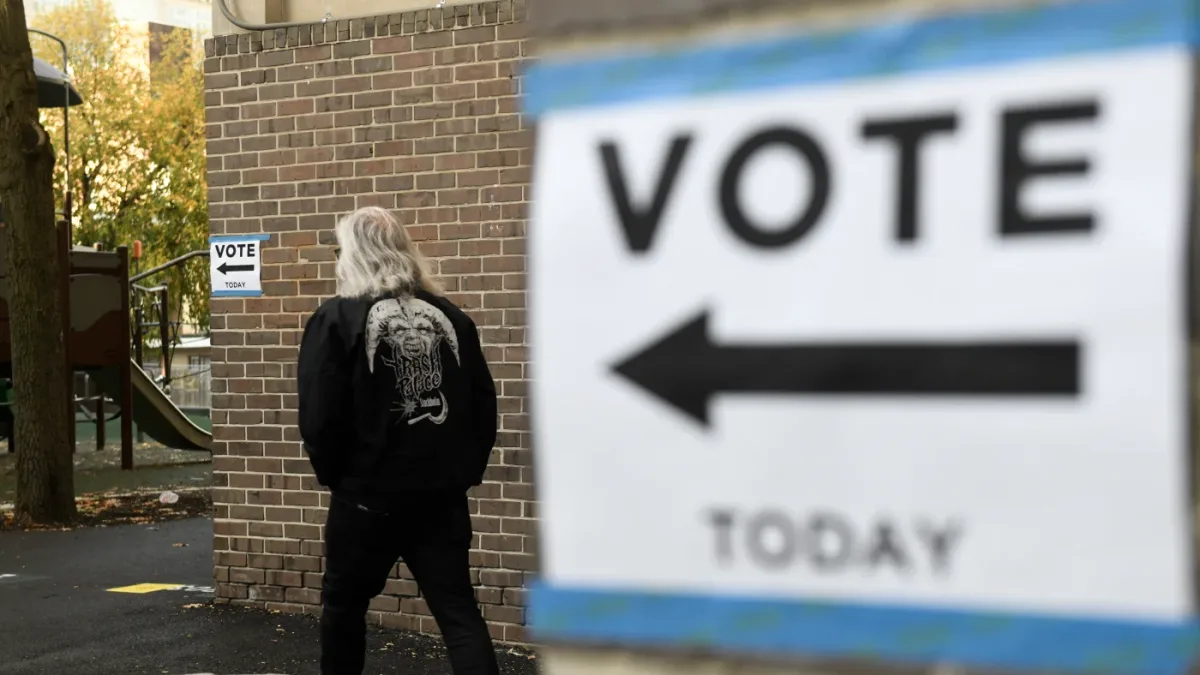
Democratic election victories could bring efforts to expand voting rights and ballot access in states across the country, NPR reports. Voting access has largely expanded nationwide in recent decades, but policy trends have been mixed in many Republican-led states. Since 2020, a number of GOP-led states have enacted laws creating new voting restrictions, chiefly on voter registration and mail voting.
That could change starting next year after Democrats consolidated power in places including Arizona, Pennsylvania and Wisconsin in this year’s midterm elections. Andrew Walchuk, senior policy director and counsel for voting and fair representation at the advocacy group Common Cause, said the coming years could be “transformative” in many of these states, with newly elected Democrats who plan to expand ballot access.
“We have at Common Cause advocates on the ground who have been working in these environments and are really excited about taking the shift from being on the defensive to being able to really push for proactive pro-voter policies,” Walchuk told NPR.
1. Making registering to vote easier
Most states offer online voter registration, but Texas and New Hampshire are among the few that do not. Barbara Smith Warner, senior policy adviser with the Institute for Responsive Government, said she expects the two states to look at changing that. In New Hampshire, Democrats won majorities in both chambers of the state legislature, and in Texas, Democrats won a majority in the state house and the governorship. Warner said that even without trifecta power in those states, Democrats will have considerable leverage to get an online system.
“As a former legislator, I will tell you, that sounds like the kind of thing that is ripe for negotiation,” she said.
In Texas, online voter registration was one of the first bills filed when lawmakers could pre-file bills for next year’s session. There could be bipartisan support after various issues with the state’s voter registration system ahead of this year’s election, and experts and voting rights advocates in Texas have long urged a move to an online system for more reliable voter rolls.
Chris Diaz, director of legislative tracking at the Voting Rights Lab, which supports expanded voting access, said he also expects Democratic states with new trifecta power to “make the voting process smoother, easier for voters” by adopting automatic or same-day voter registration. Arizona is one state on their radar. Almost half the country already offers same-day registration, which Diaz said makes voting significantly easier for people who move before an election. About half the country also has some form of automatic voter registration, which experts have found is a more efficient and effective way of managing voter rolls.
2. Faster counting of mail-in ballots
Diaz said more states will likely weigh allowing election administrators to pre-process mail ballots before Election Day. Some states take longer to count mail ballots because officials cannot start removing them from envelopes and checking voter signatures until Election Day.
“I think especially for Wisconsin and Pennsylvania,” Diaz said, “we expect to see bills that are going to put officials in a position to get a lot of mail ballots processed before Election Day, and then just lower that workload for officials on Election Day and get results to the public faster.”
The Voting Rights Lab flagged Nevada as another state that could see similar legislation.
3. Standardizing the ballot curing process
Many states let voters fix mistakes with their mail ballots in time for them to be counted, a process known as ballot curing. It can look different from state to state, and from county to county. Diaz said some states might pass laws to standardize how voters are notified of a problem and how they can fix it, such as a missing date on the ballot envelope, a missing witness signature or a missing identification number.
“Instead of just rejecting those ballots or having a variety of way counties treat those ballots that have an issue,” Diaz said, “creating a standardized system where there’s a requirement for notice to the voter within a given amount of time, and then a clear, easy process for a voter to correct that issue and ensure that their ballot is counted.”
Pennsylvania is one state where counties have different rules for ballot curing, and it has had a longstanding issue with ballots rejected because voters did not correctly provide a date on their mail-in ballots. With a new Democratic trifecta, Pennsylvania lawmakers could update these processes.
4. State-level voting rights acts
Walchuk said Common Cause plans to get more states to pass state-level voting rights acts. His group helped get such measures passed in New York, Colorado and Maryland in recent years.
“There’s a lot of room to grow there and I think the importance of the state voting rights act has really increased since the Callais decision last year,” he said, referencing a Supreme Court decision that all but gutted the 1965 Voting Rights Act. “But just given the years-long attack of the Roberts Court against the federal Voting Rights Act, getting these protections in place … is going to be a really key part of our work over the next two years.”
5. Ending some cooperation with the Trump administration on voting issues
Beyond the influx of Democrats into state legislatures, a number of Democrats will assume office as secretaries of state, including in Georgia and Ohio. Advocates say this could lead to significant changes. In most states, secretaries of state are the chief election officers. During President Trump’s second term, Republican secretaries of state have been key in the administration’s efforts to meddle in how states run their voter rolls, Walchuk said.
“The agenda of interference in elections that we saw from the Trump administration relied in large part on sort of complicity and cooperation from anti-voter politicians in these offices, in secretaries of state offices and governors’ offices and [attorney general] offices in states around the country,” he said. “And losing that cooperation takes away a key tool of this administration’s anti-voter agenda.”