US homeless count falls 6.3 percent, but chronic cases barely move
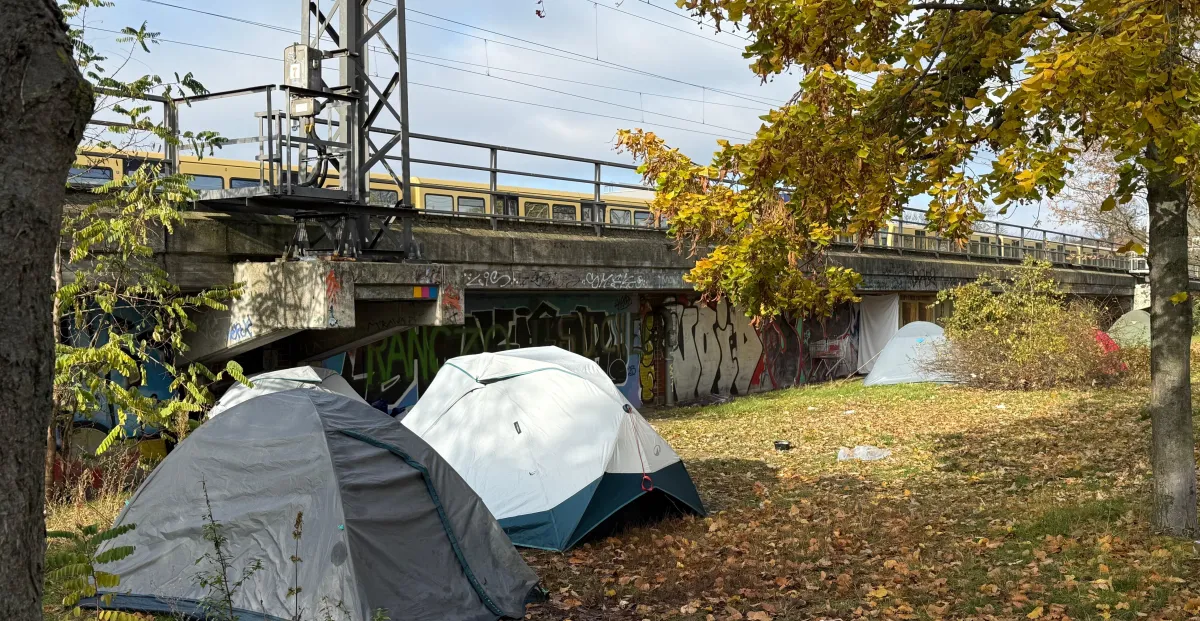
Social workers and volunteers fanned out across US towns and cities on a cold night in January to count people living without shelter — on benches, on trains, on church steps, in tents under underpasses. Combined with data on people in shelters, that ritual produces the Department of Housing and Urban Development’s Point-in-Time Count, the federal benchmark.
This year’s preliminary count, released this month, shows 698,425 people were homeless on a single night in January, down 6.3 percent from a year earlier. HUD released the figure ahead of its full annual report to Congress, but if it holds it would be the largest one-year drop since national counts began in 2007. A separate analysis commissioned by the National Alliance to End Homelessness (NAEH) estimated a similar 6.7 percent decline.
It is the second straight year the national count has fallen. Homelessness climbed by about a third between 2022 and 2024, hitting a record of about 771,000 people in 2024, then fell to 745,652 in 2025.
The White House and housing advocates tell competing stories about what is behind the trend and about the trouble spots that remain, and they favor very different policies. The stakes are high: while homelessness is declining nationwide, the number of people homeless for prolonged periods has stayed stubbornly high.
Why are there fewer homeless people?
HUD Secretary Scott Turner told Vox in a statement: “President Trump’s actions to secure the border, get criminal illegals off our streets, and restore safety to our communities drove a historic decrease in homelessness.”
Both sides agree that the rapidly shrinking number of newly arrived migrants is part of the story. The asylum-seekers who crowded into shelters in Boston, Chicago, Denver and New York City in 2023 and 2024 are mostly gone now, and economists at the University of Chicago and Dartmouth estimated that asylum-seekers accounted for about 60 percent of the jump in shelter counts during those two years. Every expert Vox spoke to said their departure explains at least part of this year’s national drop. Slower rent growth, a stronger job market, and communities recovering from disasters like Hurricane Helene and the Maui fires likely helped too.
The data has limits. HUD’s annual count notoriously excludes many people without a stable home, such as those doubled up with relatives or living week to week in motels.
At the heart of the dispute are chronically homeless people — those homeless for at least a year, or repeatedly over a three-year period, and with a serious mental illness or addiction. Their numbers appear to have barely budged in NAEH’s review.
Turner blames “failed Housing First policies” — giving people permanent housing without first requiring them to get sober or enter treatment — for keeping homelessness high. In this telling, tough love is needed, including clearing makeshift camps and using the threat of criminal punishment to get people to accept help from social services.
Advocates favor getting people shelter first and using that as a stable base for additional services. They credit the 2026 decline to the same local programs and permanent housing policies the Trump administration wants to cut. NAEH said that while there are many reasons for the drop, it is “abundantly clear” that “homeless services systems and providers nationwide are successfully using their limited resources to reach people in need.”
Advocates also point to veteran homelessness, which has fallen by nearly 60 percent since 2010 under the Housing First model, including another 7.8 percent this year. NAEH CEO Ann Oliva noted the administration hasn’t significantly changed its approach to veterans “because it’s been working.” She told Vox the national decline was “quite broad based,” showing up in cities that sheltered large numbers of migrants as well as in places that didn’t.
The debate comes as lawmakers, advocates and the courts fight over the future of homelessness policy and which programs limited funding should go toward. In 2024, the Supreme Court ruled that cities can punish people for sleeping outside even when there aren’t enough shelter beds, and hundreds of cities and more than a dozen states have since passed or stepped up enforcement of camping bans.
Since taking office, President Donald Trump has attacked Housing First policies and tried to steer federal homelessness money away from permanent housing toward short-term housing and treatment programs. His administration has repeatedly lost in court, most recently last week, when a federal judge in Rhode Island struck down HUD’s plan to set aside $1.3 billion of this year’s roughly $4 billion in homeless grants for short-term programs. The ruling means programs that already provide permanent housing can compete for that money again, and HUD has until the end of the year to distribute the funds.
In a survey by NAEH, nearly half of local homelessness leaders said uncertainty over federal money had already led programs in their area to cut services or shut down.
Why is chronic homelessness stuck?
Chronically homeless people are often the hardest to move into stable housing. Most are poor and have a serious mental illness or addiction, and many have criminal records that make landlords balk. If they do find a place, they often need ongoing supportive services to keep it. Their numbers hit a record high in HUD’s 2025 report, at 155,750 nationwide, with over 40 percent in California.
HUD didn’t release a preliminary figure for chronic homelessness this month, but NAEH estimates it rose about 1 percent in 2026. The estimate’s margin of error includes a small decline, so it isn’t yet clear whether chronic homelessness changed at all this year.
Oliva argues a big part of why chronic homelessness is stuck is that communities don’t have enough housing. Her organization estimates there was enough permanent housing for only about 9 percent of people who were homeless during the 2025 count.