Villeneuve film is “the anti-‘F1’,” says director
Director Yan Lanouette Turgeon says his 1970s-set biopic of Formula 1 racer Gilles Villeneuve is the opposite of Joseph Kosinski’s “F1,” starring Brad Pitt. “We’re the anti-‘F1,'” he told Variety. “We’re so far from NASA chief engineers improving aerodynamics. We’re in the garage, it smells of oil, and the mechanics are shirtless, changing tires with cigarettes dangling from their lips. The manual transmission felt more symbiotic between driver and car. It wasn’t a NASA driving machine but a man steering an engine. There was something romantic about that era, more rudimentary and far more dangerous.”
Villeneuve was one of its casualties, dying in a 1982 crash after winning six Grands Prix. The film closes the Torino Film Festival next week before a wider international rollout, Variety reported. True to its title, the biopic focuses on his rise from rural obscurity in Quebec to carrying the Ferrari banner on racing’s most elite tracks. After premiering as the closing film at Toronto, it has neared 2 million local admissions in Quebec, one of the strongest launches since 2019.
Where the story came from
Turgeon said he came in after artistic differences between the producer and the original director, and was offered the reins. People kept telling him stories about Gilles, or where they were when they heard he had died. “I found him inspiring for his guts, perseverance and relentlessness, and I felt we need a figure like that right now,” he said. He realized Villeneuve was still very present in Quebecers’ hearts, even if his public image had dimmed. For many, he had become just a racetrack, the Circuit Gilles-Villeneuve in Montreal.
Ending before the death
The title separates the man from his death, which isn’t shown. Turgeon called it a screenwriting decision from the start. “You can’t depict a whole life in a biopic. It becomes tiresome and directionless, so you have to choose where to land,” he said. He liked where the film ends: the rest of the story is well documented, but few people, even in Quebec, know the steps that got him there. He wanted a parallel between the jazzman and Villeneuve’s instinctive driving style. Villeneuve started in snowmobiles, then had a run in Formula Atlantic. “It’s not only a film about Gilles but about the people who helped him rise,” Turgeon said. “They say it takes a village, and he’s the perfect example. We end on a high note: the little guy from Berthierville landing the most coveted seat in F1.”
The Bruce Lee parallel
The film draws a clear parallel to Bruce Lee. Turgeon said both men died at 32, around the same era, and both are seen as eternally young. Their sons, Brandon Lee and Jacques Villeneuve, were also seen through the lens of their fathers. Both started from nothing, clawed their way up and became legends in their disciplines. The reference came during editing, when a small Bruce Lee clip on a TV in a scene resonated.
Reaching international audiences
Turgeon said that even if viewers don’t know where Berthierville is, they understand Villeneuve came from a modest background and feel how much money racing demands. “That’s an underdog story right there,” he said. In Toronto, many people couldn’t place Berthierville relative to Montreal, but they responded well in all three screenings. He said the name still resonates among racing fans in Europe, and series like Netflix’s “Formula 1: Drive to Survive” brought many young viewers to F1. The international version may carry a “based on a true story” subtitle.
Snowmobiles first
Unlike other racing dramas, the first 30 minutes are devoted to snowmobiles. Turgeon said Villeneuve took a very different path to becoming a driver, which made him unique even in Formula 1. “You can see it in how he took corners, sliding the car to exit faster,” he said. He told his lead to pay attention to how Gilles looks at people: he had a mischievous side and was always up for a prank or pushing a new vehicle to its limits. When he bought a helicopter, people who flew with him once never got back in because he’d scared them half to death.
Speed on screen
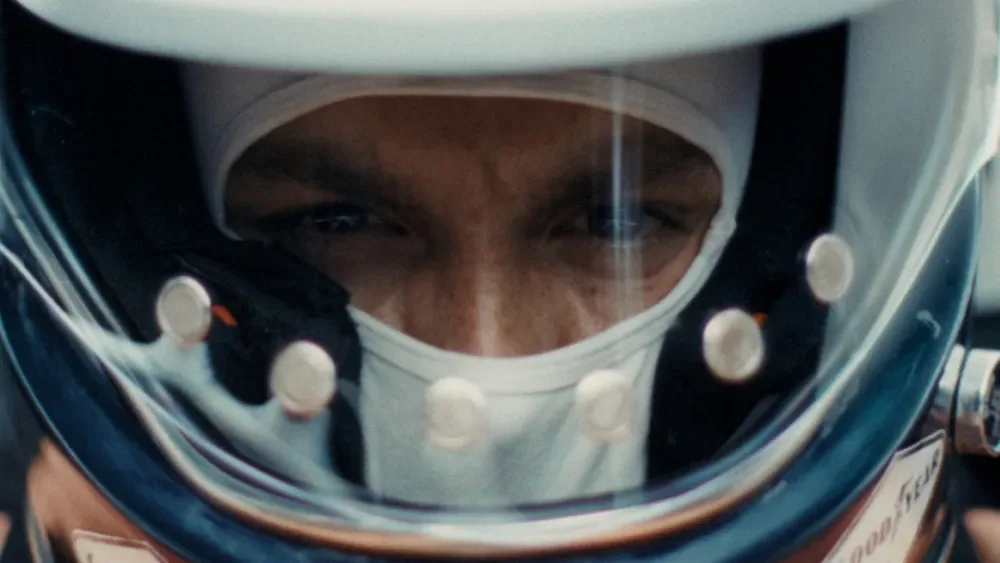
Turgeon said the stakes must be set before going into a race. To contain the budget, the team asked which races were needed and what each meant on Villeneuve’s path to F1, then designed and choreographed them, even creating pre-viz animations. He wanted the audience to live the race with Gilles, mostly from his point of view, cutting on his gaze and staying with him through gear changes and corners, with images that could have been shot in the 1970s. Speed comes from editing and camera position: the lower the camera, the more you feel the speed and every imperfection of the track.
Asked whether John Frankenheimer’s “Grand Prix” was an influence, he said yes. “Our first shot is a tribute: ‘Grand Prix’ opens on a car’s exhaust, and I thought, we’ll start like that,” he said. He liked it less for its story than for how the races were shot. Frankenheimer reportedly shot more footage than almost any film in history because he was after something real. Turgeon said he has seen all the racing films, like “Le Mans.”
He said he did worry that showing only Gilles’ eyes inside the helmet would limit emotion, since films like “Ford v Ferrari,” “Days of Thunder,” “Grand Prix” or “Le Mans” always show the protagonists’ full faces. But he realized almost immediately while shooting, and fully once in, that it worked.