Congo’s Ebola Outbreak Becomes the Fastest-Growing on Record
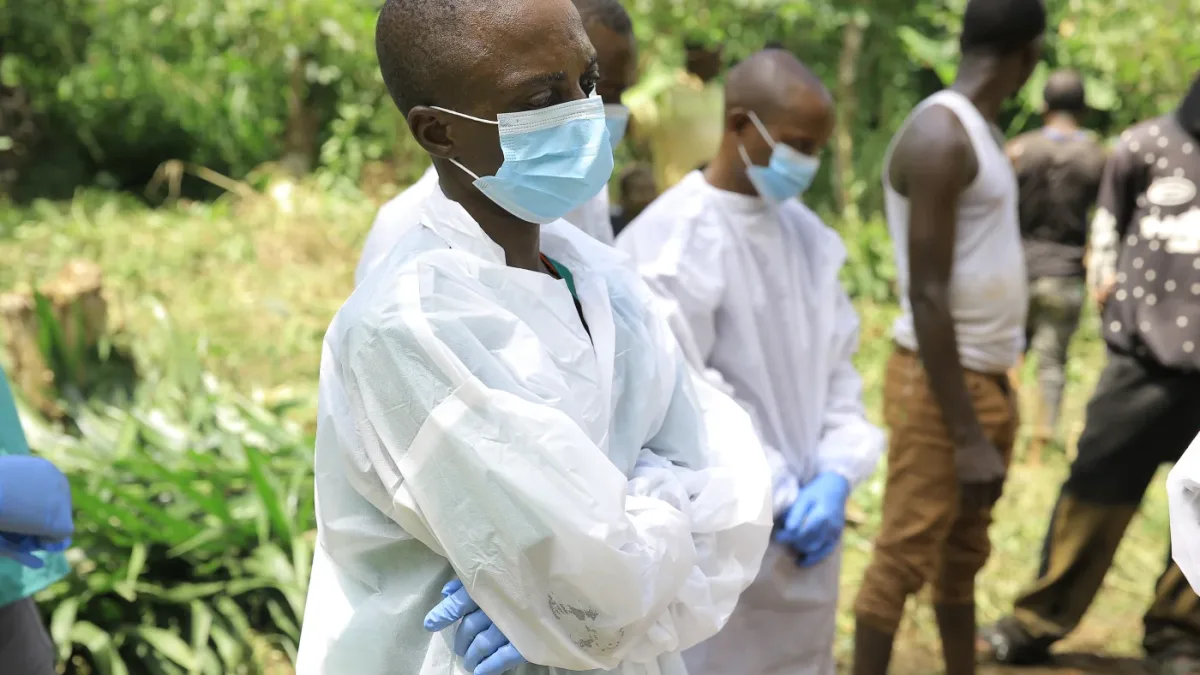
Congo’s Ebola outbreak has passed 12,000 confirmed cases, government data showed Thursday, and fighting between rebels and the army is disrupting the response. NPR reports that nearly half of the 12,021 confirmed cases have died, making it the deadliest of Congo’s 17 outbreaks.
The scale is the story. NPR, citing Congo’s Ministry of Health, reports that this is the fastest-growing Ebola outbreak in history and that it is on track to surpass the death toll from the West African outbreak that killed 11,000 people between 2014 and 2016. Those figures come from government data, and the trajectory they describe is the clearest measure of how far containment has slipped.
A virus without a matching tool
What makes this outbreak harder to answer is the pathogen itself. NPR reports it is caused by the rare Bundibugyo virus, for which there is no approved vaccine or treatment. The response therefore rests on the classic pillars NPR describes: quickly identifying and treating patients in isolation, monitoring people who may have been exposed, and safely burying the dead. Each of those steps depends on access and trust, and both are under strain.
NPR reports that response teams are battling armed conflict, poor roads and violence from residents fueled by mistrust and misinformation. That combination is not incidental to the case count; it is the mechanism by which the count keeps rising.
Fighting reaches the response hub
The geographic detail matters. NPR reports that fighting between the army and the Convention pour la révolution populaire rebels resumed Thursday morning in Iga-Barrière, a mining town about 25 kilometers north of Bunia, sending new waves of displaced people toward the city. Bunia is the capital of northeastern Ituri province and, per NPR, a major hub for the Ebola response. Displacement toward a response hub is the kind of movement that complicates the monitoring and isolation steps the response depends on.
NPR also places the CRP in context: it is one of more than 100 armed groups in eastern Congo, where conflict has created one of the world’s most severe humanitarian crises. NPR reports the group was founded last year by former warlord Thomas Lubanga, who was convicted by the International Criminal Court in 2012 of recruiting children under 15.
Why it matters
The pattern here is that the two crises reinforce each other. The outbreak’s growth is measured in case counts, but its driver is described by NPR as insecurity, displacement and mistrust — conditions that also make each new case harder to find and isolate. An outbreak of a virus with no approved vaccine or treatment, in a region where responders are fleeing, is a problem that does not stay local in practical terms: the faster it grows, the wider the window in which it can spread beyond the areas now cut off by fighting.
The supplied reporting gives no projection beyond the ministry data NPR cites, and no assessment of whether the response can regain its footing. What the numbers do establish is that the outbreak has already outrun the conditions responders need to contain it.