Ukraine’s Laser Kill Marks a Shift in Drone Defense
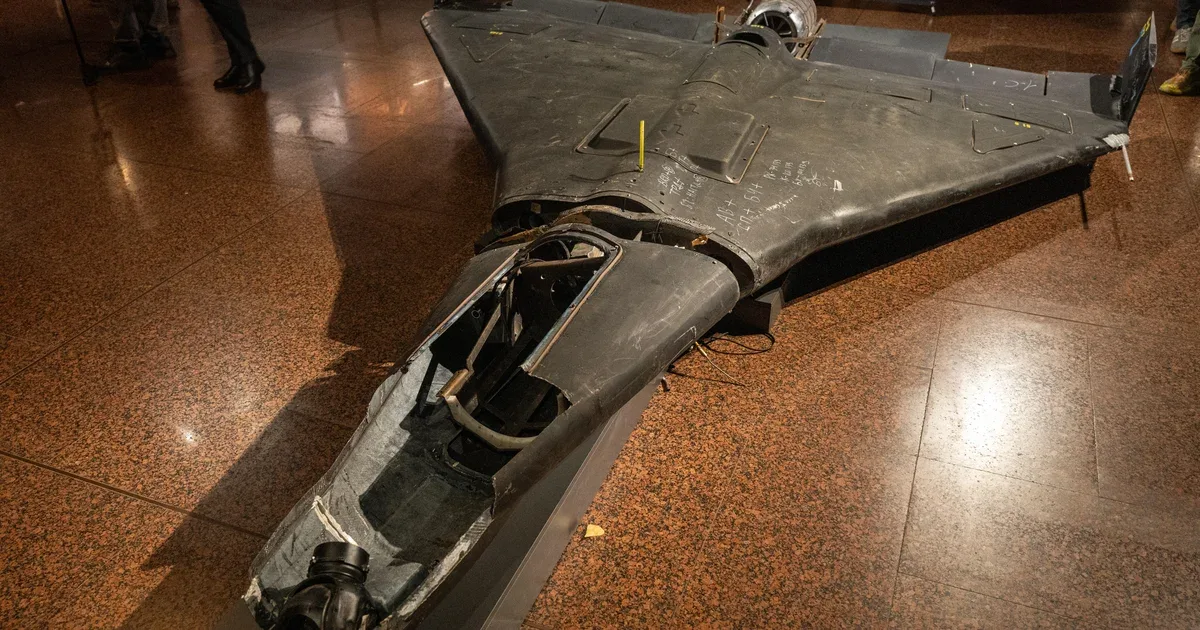
Ukraine says it has used a laser weapon to bring down a Russian jet-powered attack drone for the first time, according to a senior military adviser to President Volodymyr Zelenskyy. The interception, carried out with a system called Blysk built by Ukrainian defense firm Carmine Sky, is the first public account of laser air defense in this war — and CBS News, which reported the claim, frames it as a potentially significant development in Ukraine’s effort to defend its cities.
The detail that matters is what kind of drone was hit. CBS News reported that Russia began deploying jet-powered drones earlier this year, and that these weapons travel faster and are harder to intercept than the more common propeller-driven attack drones. In June, Ukraine was intercepting only about 57% of the jet-powered drones, the outlet reported, against roughly 90% of conventional Russian attack drones — a gap that exposed a real vulnerability as Moscow scaled up its Geran-4 and Geran-5 models.
The claim comes with the usual caveats of wartime announcements. The account rests on a statement from Serhii “Flash” Beskrestnov, Zelenskyy’s adviser, and CBS News did not report independent verification of the interception. The Blysk system is described as developed and manufactured domestically, under a government-backed Private Air Defense program that Beskrestnov said about 100 companies across Ukraine have joined. That structure — private firms, government backing, rapid fielding — is itself part of the story CBS News tells about Ukraine’s mounting efforts to adapt both its offenses and defenses as Russia’s weapons and tactics evolve.
Why a drone kill is more than a drone kill
The numbers CBS News cited, drawn from the Ukrainian military nonprofit Come Back Alive, suggest the pressure is intensifying rather than easing. The group told CBS News in September that Russia was likely to produce some 1,200 Geran-4 and 800 Geran-5 drones in that month alone, and projected those figures would grow each month. If those projections hold, a single laser interception is a proof of concept, not a solution to a production line running at that scale.
What the reporting does establish is a widening of the defensive toolkit. CBS News noted that Ukraine has pioneered battlefield drone technology and has started building partnerships to export that knowledge and hardware abroad. A domestically built laser system, if it proves repeatable, would fit that pattern: a capability developed under fire and then offered to partners.
The gap between a first and a habit
The honest reading is that the significance lies less in one downed drone than in the direction of travel. A 57% interception rate against jet-powered drones is the kind of figure that forces innovation, and the Blysk claim is evidence that Ukrainian industry is answering. But the report gives no indication of how many such systems exist, how reliably they perform, or whether they can be produced at a pace that matches Russian drone output. CBS News reported the first interception; it did not report a capability at scale.
This suggests the story to watch is not the laser itself but the industrial base behind it. The Private Air Defense program’s roughly 100 participating companies, and the decision to develop this technology domestically rather than depend on suppliers, point to a model of distributed wartime innovation. Whether that model can turn a single confirmed kill into a dependable layer of city defense is the question the coming months will answer — and the outlets covering this will need to keep asking for evidence beyond official statements.