Twelve GOP attorneys general move to revive mail voting rule for 2028
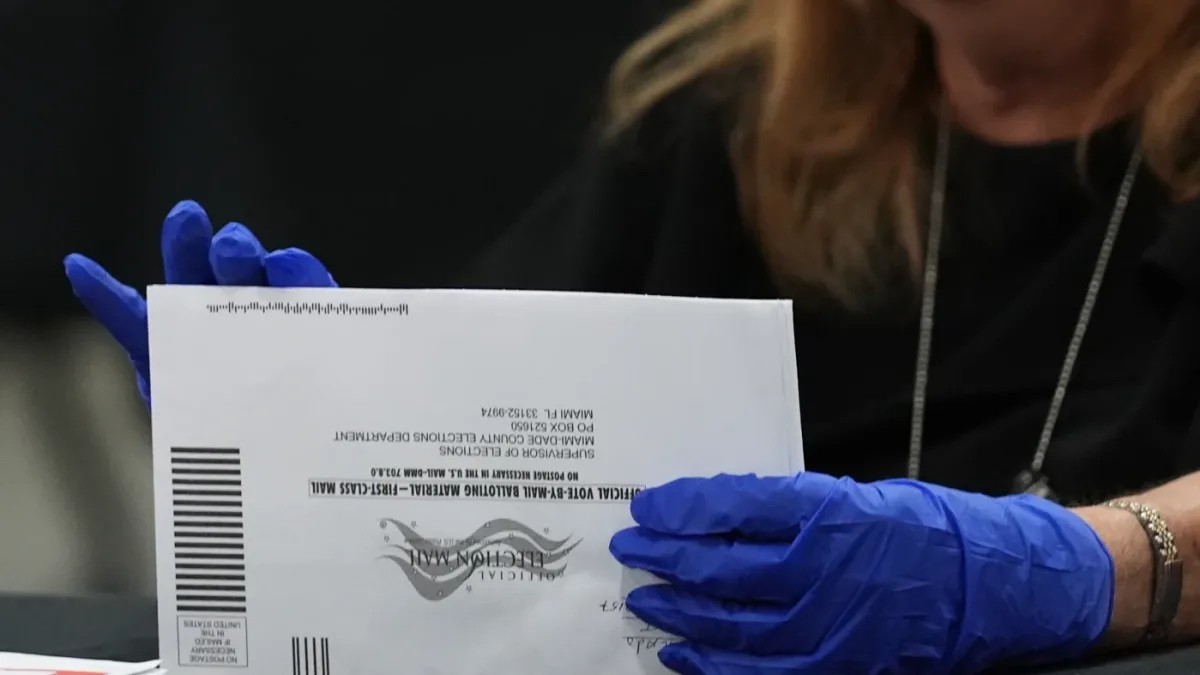
Twelve Republican state attorneys general are trying to revive President Trump’s push for mail-in voting restrictions in time for the 2028 election. On Thursday, they began the process of appealing a September order by U.S. District Judge Carl Nichols, one of two judges who blocked the U.S. Postal Service from carrying out a plan released in response to an executive order by Trump.
The attorneys general represent Alabama, Florida, Indiana, Kansas, Louisiana, Missouri, Montana, Nebraska, Oklahoma, South Carolina, South Dakota and Texas. It is not clear how long some of those states will stay in the case, given that Democrats won up and down the ballot in the midterms. In Texas and Kansas, Democratic candidates are set to take control of their states’ attorney general offices in January.
In September, the Supreme Court refused to pause a similar ruling by U.S. District Judge Indira Talwani, who is based in Boston. That order stopped USPS from working on its revised rule for federal ballot mail, but it applied only to this year’s midterm elections. Nichols’ preliminary injunction blocks USPS from implementing the plan for all federal elections, including the 2028 race.
It is not clear whether the Trump administration plans to appeal Nichols’ ruling by Friday’s deadline for filing a court notice. Asked about the Justice Department’s plans, DOJ spokesperson Matthew Tragesser said in an email that the department does not comment on ongoing litigation.
The blocked rule, which the Postal Service released in late August, would require states to turn over lists of voters’ names and addresses in order to have mail delivered by USPS. Nichols, a Washington, D.C.-based judge nominated by Trump, found that the mailing agency likely has no power to impose that requirement on states.
“As the Government concedes, the Postal Service could issue (and enforce) the Rule only if Congress gave it the authority to do so, but here no statute grants the Postal Service the power to issue key parts of the Rule,” Nichols wrote.
The administration’s earlier push to put the restrictions in place for the midterms alarmed many election officials, who worried that last-minute changes could cause major disruptions for the tens of millions who regularly vote by mail. Some voters with disabilities and those in places without polling sites, they feared, could have lost the ability to cast a ballot. A whistleblower report claimed the online system officials would need to follow USPS’ revised ballot requirements had not been properly tested and could have resulted in many eligible voters not getting their mail-in ballots in time or at all.
While the Supreme Court ultimately stopped implementation of the USPS rule for the midterms, Justices Samuel Alito and Clarence Thomas dissented. Fellow conservative Justice Brett Kavanaugh said in a concurring opinion that he believed state and local election officials did not have enough time to “reasonably implement the rule” this time. But Kavanaugh noted that “there is at least a fair prospect that the final rule falls within the Postal Service’s statutory authority.”