Two Blackouts, Two Days: Fortune Asks if It’s Coincidence
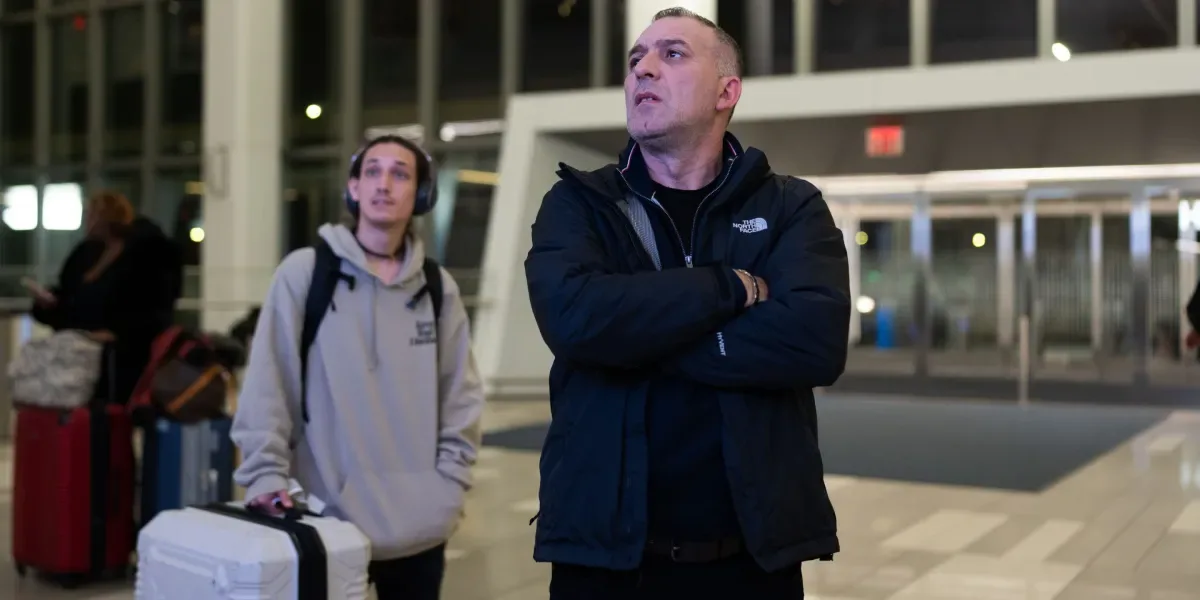
Two unprecedented failures of critical U.S. infrastructure in two days have prompted Fortune to ask whether the timing is “too coincidental to be a coincidence.” The first was a Microsoft outage that took Outlook, Teams and Copilot offline in 74 countries for hours; the second, the next day, was a nationwide FAA ground stop, only the third in U.S. history.
Fortune’s infrastructure piece lays out the sequence: at 3:54 p.m. ET on Friday, November 13, the FAA grounded every departing flight in America, “due to extraordinary circumstances and for reasons of safety.” Transportation Secretary Sean Duffy said only that “a communication issue” had struck every one of the 22 centers that guide planes across the country. Fortune notes the piece was published against the backdrop of Jensen Huang’s removal as Nvidia CEO amid an affair with a suspected Chinese spy, recriminations about chip exports to China and demands for tighter export controls — and asks whether China or other hostile foreign actors could be targeting U.S. infrastructure. It offers no answer, saying only that it is “too early to know for sure,” and argues the country deserves far more transparent answers than it has received.
Officials hedge, and the hedges differ
The official accounts, as reported across outlets, are notably less dramatic than Fortune’s framing. Ars Technica quotes Homeland Security Secretary Markwayne Mullin saying the ground stop was not prompted by a security threat: “This is a telecommunications outage out of the FAA. Out of an abundance of caution, we have grounded all of the flights,” he said, adding, “There’s no indication as of yet that this is a nefarious attack against us.”
Fortune’s own news report on the lift of the ground stop carries a more qualified version of the same claim. There, Mullin said it “doesn’t appear” a cyberattack was involved, while admitting “there’s nothing certain right now.” He attributed the disruption to technology upgrades overwhelming antiquated equipment and warned, “It’s going to continue to fail.” Duffy, per that report, said the fix gave “a pretty good indication that it was a legacy network problem that went down,” and called on Congress for emergency funding — putting the figure first at $30 billion, then at $50 billion. Fortune also reports that just days before the ground stop, the FAA announced it would deploy an AI tool to help air-traffic controllers.
The gap between the two Fortune pieces is the story’s real fault line. One piece treats the back-to-back blackouts as a possible hostile act demanding transparency; the other records officials blaming aging equipment and asking for money. Mullin, in the same briefing, ruled out a terrorist attack — “This isn’t another 9/11” — while conceding uncertainty.
What the outlets agree on
Ars Technica and Fortune agree on the bare facts: the stop was the third nationwide ground stop ever, after September 11, 2001, and a January 11, 2023 outage of the Notice to Air Missions system that lasted less than two hours. Ars Technica adds that airlines moved quickly to cancel later flights, with American Airlines warning disruptions were expected for the rest of the day, and quotes Mullin: “This is going to take some time. Flights are accounted for, and there should be no fear to the public at all.”
The pattern here is that the same set of official statements supports two very different stories — a systems-are-failing-and-we-need-money story, and a what-are-they-not-telling-us story. Fortune’s own reporting contains both, and the outlet does not reconcile them. That the government’s most specific answers came in the form of a funding request, while its security assurances came wrapped in “as of yet” and “nothing certain,” is itself the most telling detail in the record.